Drainage Systems in Acadiana
Understanding Drainage Systems in Lafayette
What Every Landowner and Developer Should Know
Whether you’re building a custom home, developing a few lots, or planning a subdivision, understanding how drainage systems work is critical to protecting your investment.
Here’s a breakdown of the most common drainage systems used in Lafayette—and how we approach them as builders.
Why Drainage Matters So Much in Lafayette
With flat terrain, heavy rainfall, and a high water table, Lafayette requires thoughtful drainage planning on every project.
Done right, drainage:
Prevents flooding on-site and downstream
Protects foundations and roadways
Keeps lots buildable and marketable
Done wrong, it leads to:
Standing water
Costly rework
Unhappy homeowners
That’s why we treat drainage as a core part of development.
1. Open Ditches & Swales
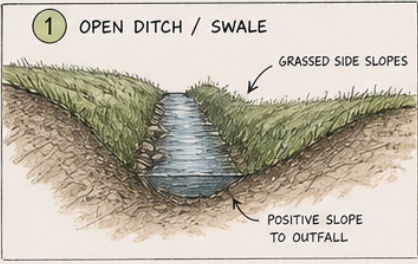
Open ditches and swales are the most common drainage system used throughout Acadiana.
How They Work:
Water is directed across the surface into shallow, graded channels that carry runoff away from lots and roadways.
Why They’re Used:
Cost-effective
Simple to maintain
Well-suited for flat terrain
What Matters Most:
Proper slope and grading
Correct elevation of lots vs. ditch
Consistent outfall direction
2. Culverts & Underground Drainage Pipes
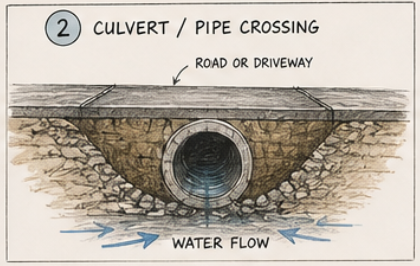
Culverts and underground piping systems are used to move water efficiently beneath roads, driveways, and other obstructions.
How They Work:
Water flows through pipes (typically concrete or HDPE) to connect ditches and drainage systems across the site.
Where You’ll See Them:
Under driveways
Beneath road crossings
Connecting swales to larger systems
What Matters Most:
Proper pipe sizing
Correct installation elevation
Long-term durability
3. Detention & Retention Ponds
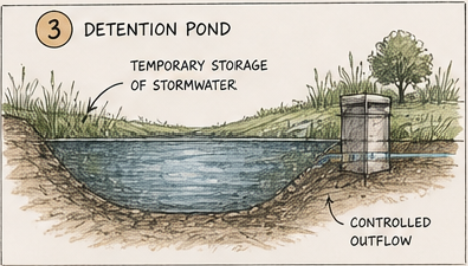
Most modern developments require some form of stormwater storage—and that’s where detention and retention ponds come in.
How They Work:
Detention ponds temporarily hold water and release it slowly
Retention ponds hold water permanently
Why They’re Important:
Reduce downstream flooding
Meet local drainage regulations
Manage runoff from roads and roofs
What Matters Most:
Proper sizing and engineering
Controlled outflow
Integration into the overall site design
4. Curb & Gutter Drainage Systems
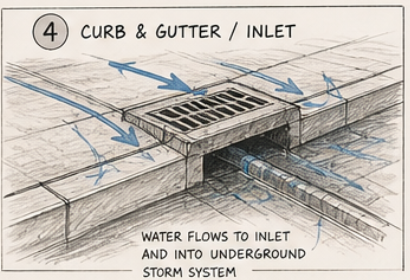
In higher-density or more urban-style developments, curb and gutter systems replace traditional ditches.
How They Work:
Water flows along the street into curb inlets (or commonly called catch basin), which connect to underground storm sewer systems.
Why They’re Used:
Cleaner, more finished look
Maximizes usable lot space
Common in tighter developments
What Matters Most:
Proper catch basin spacing
Adequate pipe capacity
Coordination with street elevations
While more expensive, this system can elevate the overall feel of a neighborhood.
Choosing the Right System for Your Property
Not every drainage solution fits every piece of land.
The right system depends on:
Property size and layout
Soil conditions
Elevation and flood zone
Access to existing drainage infrastructure
Budget and development goals
Our Approach to Drainage at Southern Artisan Builders
We take a builder-first approach to drainage design:
Plan drainage alongside lot layout
Coordinate closely with engineers and Lafayette Consolidated Government
Focus on systems that are both effective and buildable
Prioritize long-term performance
Because at the end of the day, drainage isn’t just about moving water—it’s about protecting everything you build on top of it.
Thinking About Developing Land?
If you’re considering building or developing property in Lafayette or the surrounding areas, we can help you understand exactly what your land needs—and how to approach it the right way.
From initial feasibility to final construction, Southern Artisan Builders Louisiana is here to guide the process.
Contact us at 337-655-8144 or email us at sabuildersla@gmail.com